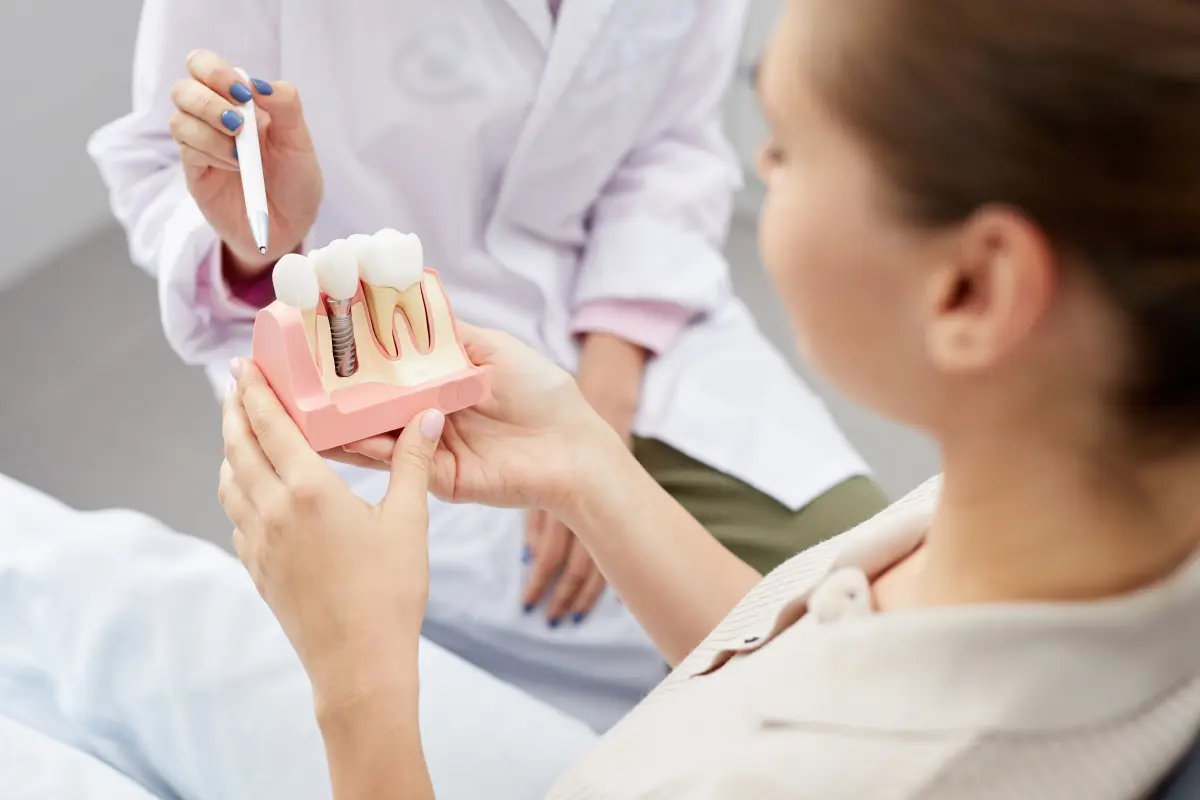
Dental implant surgery is the name given to the medical procedure that replaces damaged, missing or bad teeth with artificial ones that function and look like real teeth. In order to determine the best treatment, the patient will need dental X-rays and 3D images of their teeth and jaw. Their medical history must also be thoroughly examined and finally a treatment plan must be decided upon. This treatment plan takes into consideration how many teeth need to be replaced, the condition of the patient’s jaw and remaining teeth. Sometimes a bone grafting may be required if the patient’s gum is not strong or thick enough to hold the implants in place. This will be an additional step of surgery in the treatment plan.
• People who have missing teeth
• People who don’t want to or can’t wear dentures
• People who had damage to their teeth due to decay or infection that is beyond repair
After examining your gums, your jaw line and teeth your doctor will put you under local or general anesthesia. Then a cut will be made into the gum and bone will be exposed. A metal post will be placed into the bone using drills. This post will act like the tooth root and in order to make sure that the implant will survive heavy chewing, it will be planted deep into the bone.
After this is done, the patient will have to wait for a few moths for the jawbone to grow and unite with surface of the dental implant. This process is called osseointegration. This provides a solid base for the new artificial tooth to bind into.
While waiting for this process to take place some patients choose to have a temporary denture be put in place of the missing tooth. This is done for appearance reasons.
When the osseointegration process is completed, the jawbone is strong enough and the gums have healed, then your surgeon will place the new tooth into place. This artificial new tooth can be removable, fixed or a combination of both which is something you and your doctor will decide upon depending on your condition.
The dental implant surgery may take one or multiple stages of surgeries to complete. Depending on what is actually needed, recovery times will vary. In general terms however, swelling in the jaw and face, bruising, mild pain is completely normal and expected. Pain medication and antibiotics will be prescribed by the doctor in order to help with recovery. After each stage of surgery, you may need to be to on a liquid only or soft food diet for a day or two. Stitches will also be used and they may need to be removed by the doctor if the treatment site did not allow for self-dissolving ones. Smoking is not recommended as it delays healing.